Get a free sales audit to uncover hidden revenue opportunities!

As we all know SaaS is application software that has been deployed as a hosted service and is accessible over the internet through standard browsers. Sales companies use several SaaS to make sales, generate more income or make the job easier for themselves.

One such service used by sales teams is CRM or in other words – Sales Stack. Software that helps in bringing all the contacts, deals & even customers segments that you might have in one place. Nowadays sales platforms sync with social networks and also provide the features that keep track of your tasks and the conversations with the contacts, and this is very useful software for the sales team to keep track of the sales being made or the leads that go cold.

Related: Stuck in a Rut: Why Enterprise-to-Enterprise Business isn’t what it used to be

Factors you should be considering when you look at a sales stack

Choosing a CRM software for your business, that would help in connecting your teams, keep track of your sales, help you in managing your customer relationships, and also provide you with clear and meaningful insights; can be a complicated task when there are too many options available. However, there are many factors you should be considering when you look at a sales stack.

Before diving into getting a CRM, you need to understand why you require a CRM for your business in the first place. It is important that you understand that a CRM is both related to the approaches and the relationship you should be keeping with your customer, as well as the software that you should employ to keep track of those customers. Having a CRM strategy that is used to the right kind of technology can be the most powerful tool in your hand. Before that, you need to determine why you would like to use a CRM.

  • Is it to make your business and yourself more organized?
  • Is it for the purpose of gaining powerful business insights?
  • Is it for the purpose of achieving a history of contacts, leads, and conversations?
  • Is it to make yourself more productive by scaling up your operations?

Being able to manage your customer relationships in an efficient way can be a challenging task. Since there are many more avenues for connecting with the current as well potential customers, many companies have become unsure about how to leverage these avenues for building up a long-term customer relationship. When CRM software is used in a proper way, it helps the business in leveraging these avenues effectively for building up a substantial relationship with the customers. There was a time when CRM was seen as a nonessential solution; however, nowadays CRMs are on a rise.

The need for insights

Since CRM software is expanding exponentially, companies will need to know how to make use of the software to their benefit and how to achieve the ROI much more quickly. Many of companies repeat the same mistakes when implementing a CRM solution. This leads towards the need for insights for the businesses for mastering the Sales Stack in an efficient manner. Certain pitfalls should be kept in mind when you are choosing a CRM solution and the ways to avoid such issues.

The type of insights that you can get from your CRM software is just as good as the data that you put in it. To make sure that the friction of the people, process, and the system is minimized, a CRM that helps in promoting user adoption should be acquired.

  • The bottom-up approach, providing the team with only the things they need
  • Unnatural processes should be avoided
  • CRM with a great UX and easy to use

Do you have a CRM that keeps you organised?

The most user-friendly CRM on the market. 14-day free trial.

Start Free Trial

Painless setup, no credit card required

As a salesperson or a manager, you should think about the metrics that you wish to see, and you should also make sure that your Sales platform provides you with such insights:

  • Incoming Deals Volume Report
    This report is a breakdown of numbers that shows the deals registered over a period and the percentage of the total deals you secured
  • Sales Forecasting
    This report mentions the total value of the deals available in the pipeline and the amount that your business can bring in.
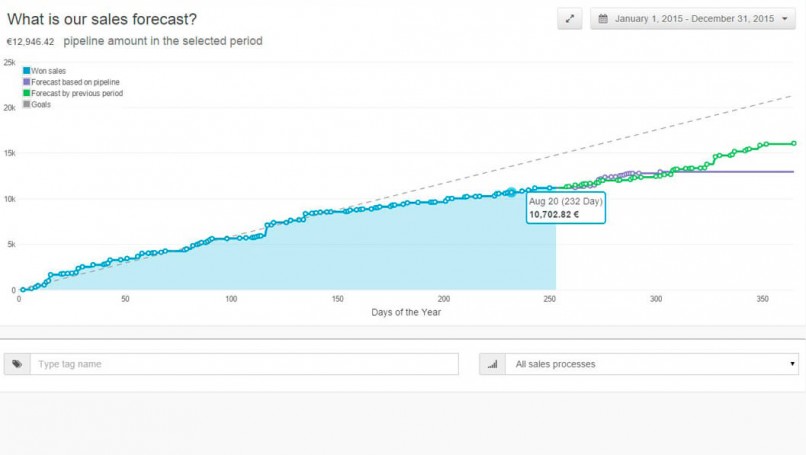
forecast small (1)

  • Sales Revenue Goals
    This helps in the setting and monitoring of individual and team revenue goals that are set with each passing
  • Won Leads/Deals
    The number of Leads/Deals won mentioned that are won by a team or member over any period with conversions.
funnel small (1)

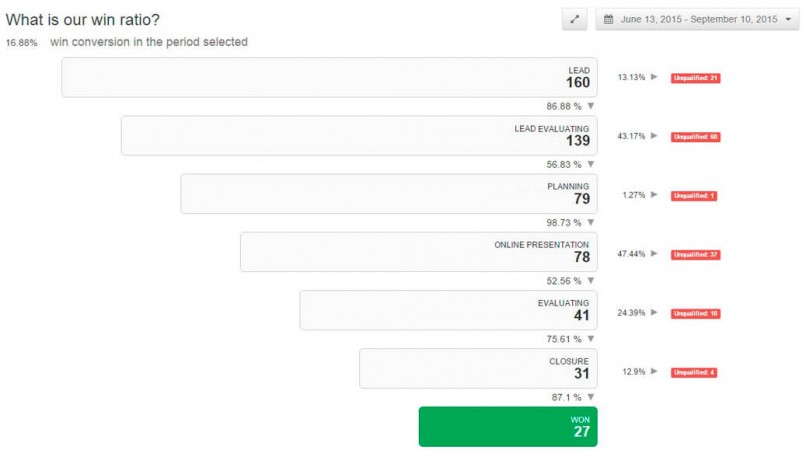
  • Sales Funnel Analysis
    This report tells the standpoint of the team at all the points in the pipeline and what your business can gain or lose.
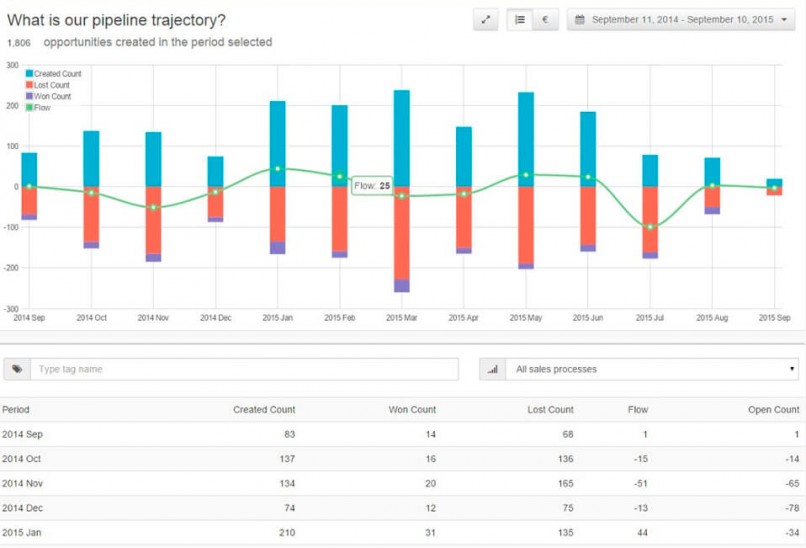
trajectory small (1)

However, even if you can make your business grow well with the insights you get from the CRM you have employed, you need to ensure that you grow your CRM as your business grows. Just because it is working for you now, doesn’t mean it will work for in the next five years. Look for a Sales Stack that will be a long-term partner for you and your business. Try Teamgate.
Not every CRM software solution suits your business needs, their size and shape may not be the only concern, rather the point of concern comes into play where the compatibility of the software doesn’t match with the overall enterprise requirements. As CRM software is a crucial component not only for B2B but also for all B2C interactions, it is pivotal for businesses to make the right decision for setting an efficient sales trajectory across business functions.

Even if you are not new to the CRM software world, you still need to set some CRM-related goals as the new technological developments are pouring in every now and then. There are three types of users who would be reading this blog to make a choice for integrating the right CRM solution.

  • Startups & Millenials; who are new to the world of CRM Software world
  • Small and Medium-sized businesses who are finding it difficult to adapt to the new changes
  • Businesses who are planning to expand or revamp their existing CRM solutions

For gauging the compatibility of your CRM software, you must be looking for certain metrics. Some of them are mentioned below.

Related: The KPIs that indicate SaaS is in Demand and An Extensive Sales Stack for Current Business

Do you have a CRM that keeps you organised?

The most user-friendly CRM on the market. 14-day free trial.

Start Free Trial

Painless setup, no credit card required

Real Time Data processing

Many businesses operate on every shred of connectivity, the data gathering, sharing, and storing takes place in seconds. In such cases, businesses require a platform where data is processed in real-time, which can be presented in the form of trend reports or sales figures. Whether it’s about lead management or sales management, your CRM solution needs to give a clear presentation of the KPIs weighed against the actual performance map. So, your CRM solution must have smart reporting tools that can be broken down into measurable chunks of activities. Also, you can decide whether you would require a daily, weekly, or monthly track record for your CRM activities, depending on your business’s course of operation.

Related: Deference to Expertise – Respect Insights about the Business from “Experts”

Smart Integration Solution

Many channels of communication are already integrated into your business systems, such as emails, social networks, portals VoIP, and other connectivity tools. A good CRM solution must be able to blend in your existing systems with the smooth integration of additional features such as task management, leads and sales management, sales pipeline tracking, storage and collaboration areas, and many more.

Not only this, but you can also think of integrating enterprise resource management, automated call diversion, campaign management, and shared voice telephony. But, it all comes down to one thing: what does your CRM solution has to offer you. So, when choosing such software, you must be sure about its integration and compatibility with the built-in features of other enterprise solutions.

Related: Top 4 Challenges of Cloud Computing

CRM on Business Size Basis

It is pertinent that businesses must choose CRM based on the size of their enterprise. For small businesses, there are limited numbers of users who would be using the CRM software. The features and modules needed for such businesses will also be less as compared to large businesses. On the contrary, enterprise CRM would require more features for data handling and more access support. So, your choice must be based on the utility of the software rather than its popularity.

All these metrics will make it easy for you to choose the most suitable CRM system for all your B2C functions. You need to look into the bigger picture of the ever-changing technological landscape. It may sound cliché at the moment as many businesses have already ventured into the world of cloud-based CRM, but small and medium-sized businesses still struggle to get their way through such CRM solutions, till they don’t find a match that will make them competitive.

Interested in giving CRM for B2C a test drive? Try Teamgate CRM for free Today

Everybody talks about the opportunities brought about by cloud computing in the technological landscape. The integration of cloud computing is being adopted by almost every business out there. This transition to cloud computing can be attributed to the fact that it has the potency to help organizations in improving their data management systems in an efficient way – by cutting costs, bringing flexibility and effective customer relationships.

Although cloud computing is gaining momentum with every new upgrade, and by this, it also means that certain challenges also stand in the way of its implementation and adoption.

Devising a good computing strategy can be very crucial to foresee such challenges. While you plan and implement cloud computing, you also need to ensure that it complements your resources and capabilities, and coordinates with your on-premise infrastructure.

These challenges are not always understandable at the first stage, which may be the reason your cloud computing messes up every now and then. With knowledge about such challenges, businesses can weigh the pros and cons they are going to face with cloud computing.

Some of the most common challenges are:

Security challenges

  •  The concerns regarding privacy have become rampant with the way the digital arena is progressing. And also, the number of cybercrimes, mainly hacking, is on the toll. To fortify the security pillars of your cloud infrastructure, it’s essential to implement robust strategies. This means securing data in the cloud by safeguarding it from potential breaches and unauthorized access, ensuring compliance with industry standards, and maintaining visibility and control over your data assets. The data which needs to be kept within the firewalls of the organization can be accessed by any intruder any time they wish to.  Although the stakes are higher for businesses in this regard, however, some protective measures can be integrated to keep the data secure on cloud computing.  To mitigate these concerns, companies can use several security software and applications across their servers. Moreover, the security encryption on cloud data files can also ensure that data stays within the shared area of cloud computing. Also, every organization should have a proper backup storage system channelized through data loss software.

Monitoring of Cloud Computing

  • It’s hard to monitor the activity of the users across different cloud computing software. While using SaaS (software as a service), less visibility becomes a challenge for the users.  Moreover, during the integration of SaaS, this issue must be kept into consideration. So along with SaaS, integration solutions should be included, that can help make the information flow as transparent as possible. These integration solutions must be compatible as well as rich in monitoring competence so that all the in-house activities are under control.

Do you have a CRM that keeps you organised?

The most user-friendly CRM on the market. 14-day free trial.

Start Free Trial

Painless setup, no credit card required

Reliability Concerns

  • There is no guarantee that your cloud computing is going to work the same way as you want. The frequent server issues and internet outages can slow down the whole work process. Also, the more you depend on cloud computing for all your data storage functions, the more loaded it becomes, leading to technical glitches. So, to tackle this, you can take precautionary measures such as supervising the agility, robustness, and storing capabilities of the system.

Limitations regarding Costs

  • Sometimes the costs of cloud computing are difficult to access as the nature and requirements of such services can fluctuate due to the demand. The service providers may guarantee the service quality; however the scalability of such plans can vary, so target benchmarks regarding costs must be agreed upon within the service level agreements (SLAs).

Related: The KPIs that indicate SaaS is in Demand

Summary

These challenges can be overcome by using the solutions discussed above. Although cloud computing can increase business concerns regarding privacy and reliability, it can be an excellent way to overcome overheads that may otherwise be incurred due to the on-premise use of resources and infrastructure. To be on the safe side, businesses must be prepared to take advantage of every up-gradation of the technology in cloud computing and build infrastructure with the customer experience in mind.

Interested in giving Data Management a test drive? Try Teamgate CRM for free Today

In the U.S. there are roughly 74.3 million Millennials, representing 23.6% of the population. Each year these people spend approximately $600 billion. You can not afford to ignore millennials in your consumer outreach, period. Even if you’re selling bed pans.

#1: Your business will fail without Millennials – Let Them Know Their Value

If they haven’t done so already, companies have very little time to get a strategy together to engage Millennials as either consumers or employees…or both. Those that can’t will be out of business, as Millennials are unlikely to work  for or purchase from a company they don’t believe in. 

#2 Create a memorable experience with customers

Growing your CRM by creating a positive experience with integrated technology. Capture a millennial’s attention by showing them you’re listening.

Have a two-way conversation with your millennial consumers using online tools, create an insight community using social media platforms.

  • “Understand which issues actually matter to them
  • Get insights on why they switch and their triggers of purchase
  • Improve your community and philanthropic efforts by understanding which issues actually matter to them
  • Focus your promotion efforts by knowing which mediums they use and how often”

#3 Capture a millennial’s attention by showing them you’re listening.

Have a two-way conversation with your millennial consumers using online tools, create an insight community using social media platforms.

  • “Understand which issues actually matter to them
  • Get insights on why they switch and their triggers of purchase
  • Improve your community and philanthropic efforts by understanding which issues actually matter to them
  • Focus your promotion efforts by knowing which mediums they use and how often”

Gen-Y customers expect an answer instantly, anytime, anywhere, to any question, and they aren’t afraid to look for the information they crave.

As technology is such a crucial player in most Millennials’ lives, they will expect it to work hand and hand with any device, anytime, and anyplace.

Businesses need to be able to tap into the tech-savvy expectations of this new generation and weave it into making every day actions accessible through technology.

Millennials are not fans of calling a rep.

Unlike baby boomers, millennials are not big fans of calling a customer service representative. Millennials want to choose how they’re going to communicate with brands, which includes SMS and social. The days of face-to-face communication are over. So make sure that you have other ways to keep in touch with millennials instead of just the phone. Only around 1 percent of the calls that we get to our company are from the millennial generation.

Do you have a CRM that keeps you organised?

The most user-friendly CRM on the market. 14-day free trial.

Start Free Trial

Painless setup, no credit card required

How to Cater your CRM to Millenials

The advent of social media and the proliferation of mobile devices has caused CRM providers to upgrade their offerings to include new features that cater to customers who use these technologies.

Social CRM refers to businesses engaging customers directly through social media platforms such as Facebook, Twitter and LinkedIn. Social media presents an open forum for customers to share experiences with a brand, whether they’re airing grievances or promoting products.

The millennial generation identifies strongly with working for the greater good and making the world a better place. Great, right? 

This isn’t just blabber either – in one study 50% of millennials said they’d prefer to have a lower salary but find a workplace that matches their values, and a staggering 90% said they wanted to use their skills for good.

Just wrap it up with a brief touch on each of the subheadings + ask readers to leave a comment.

Keep an eye on our blog for future updates and tips on how to be a salesperson or how to make the best out of CRM.

This is How CRM Helps Effectively Build and Maintain Rapport With Real People

Imagine what would have happened if Apple products never found a solid fan base, or if Mark Zuckerberg had never asked his fellow students to join Facebook? Do you hear the crickets? That’s probably all we would have heard if these two companies had never put any emphasis on building customer relationships. Instead, hundreds of news articles are published concerning Apple products each day, while Facebook is brought up daily in household conversations. Companies rely on relationships with customers to grow and thrive.

Customer loyalty is the foundation on which every successful business is built. In some cases, this entails going out to lunch with a prospect or sending ball game tickets to a past client. But, today, much of a company’s rapport-building relies on technology to stay strong. Here are three major ways how technology can save and help maintain your customer relationships.

#1: With the Right Tools, Customers Won’t Get Lost in the Mix

Sometime after the Industrial Revolution, sellers lost their personal relationships with buyers. With modern shopping habits, mass production, and the self-serving convenience of the internet, the intimacy required in maintaining a connection can easily slip through your hands. Customer Relationship Management (CRM) software does provide a viable solution for this problem. You may not be able to shake the hand of everyone who purchases a product, contributing to your well-being, but you will be able to maximize the relationship potential of all e-customers.  

teamgate-call (1)

Here are some promises that customer relationship and sales management  platform offers you, the seller:

  • A chance to understand your customer through data mining and storage.
  • The opportunity for personalized buyer recommendations.
  • Integration of supplier and buyer transactions.
  • Optimized communication.
  • Adapting technology for an unpredictable, ever-changing market.  

Companies need to focus on delivering services that keep retail relationships strong. With CRM technology, this task becomes easier, and customers appreciate the feeling that an organization has gone the extra mile.

Related: Deference to Expertise – Respect Insights about the Business from “Experts”

 #2: Did You Know That Consistency is the Root of Satisfaction?

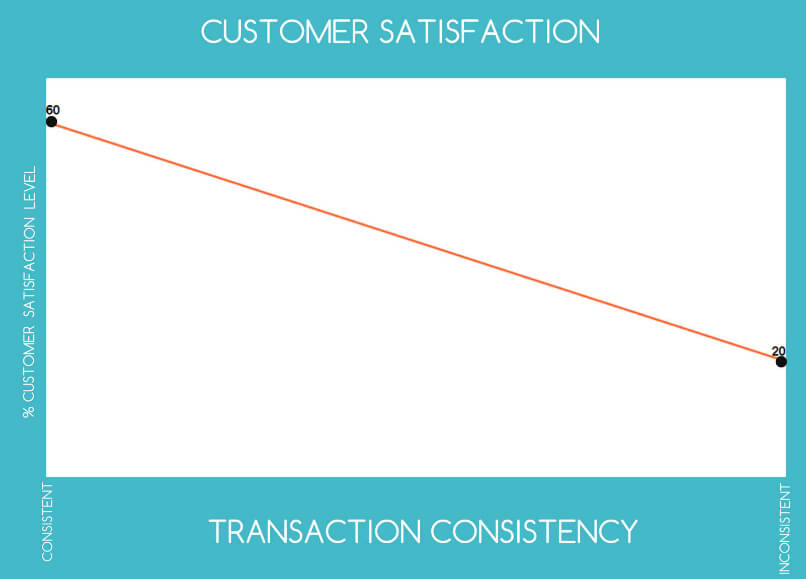
As you can see in this graph, based on information from Distinguishing Service Quality and Customer Satisfaction out of the Journal of Consumer Psychology, the level of customer satisfaction has a direct correlation with transaction consistency.

teamgate-customer-success-806 (1)

All secure relationships require consistency. Those between a buyer and seller are no different. Without secure, authentic commitments on your behalf, business associations will dwindle. With CRM, you are given a single view of your customer, insight into the value of each prospect, and a chance to prioritize resources into the most profitable areas.

When you have a unified view of your customer, you are able to better deliver what is expected. You will have a better understanding how to satisfy particular segments. Consistency in your communication amongst patrons becomes easier to deliver when you utilize new technology.

#3 Technology Helps You Deliver Customized Value to Consumers

You and your business are only one part of the value equation. Customers rely on more than just what you think and what you want. They actually come to expect certain experiences from you, sometimes based on factors entirely separate from what you claim to deliver or have proven in the past.

With customer relationship and sales management platform technology and data storage, you have the information handy to target research on specific demographics of your very own customers. Try to see if you can get into the minds of your customers, and replicate their thinking.

Your customer relationship and sales management platform provides you with the perfect opportunity to gather valuable information about people who have already purchased your products, those who are interested, and even the ones who are not. With careful analysis, you can create accurate, detailed customer profiles.

Do you have a CRM that keeps you organised?

The most user-friendly CRM on the market. 14-day free trial.

Start Free Trial

Painless setup, no credit card required

Many times, you can take this a step further than just input of what your customers have told you about themselves by researching public information online. You have John Smith’s email address, so can you find out what public accounts he has linked to this same email address? From there, can you find out what he is interested in aside from your products or services? Do you see any links between his interests and the interests of others? By asking questions like these and strategizing with the answers in mind,  you can often come up with valuable information to target your marketing campaigns.

Not only do inform strategies create enhanced relationships with current customers, but they provide the opportunity to attract new, like-minded leads at the same time. The internet provides an amazing tool for creating highly personalized advertising. Use the language and thoughts of your target market to appeal to them and provide more value. This is what consumers really respond to.

Summary

You may not be running a fortune 500 company, but you can certainly learn to think like one. Make sure your customer data is stored securely so that they don’t become just more numbers, provide consistency in your communications, and deliver value through personalized interactions and advertising. With the help of modern tools, you can save your customer relationships even when you can’t take everyone on your email list out to lunch. Most of those people wouldn’t have time for that anyway.

Related: Interactive Graphic Shows the Best Days of the Week for International Customer Sign-ups and 6 Sure and Simple Ways to Internationalize Your Business

Remember when developers started to be called “Hackers”? Or how many marketers now call themselves “Growth Hackers”?

No one will blame you if you believe Customer Success is just a rebranding of Customer Support or Account Management.

chart crm

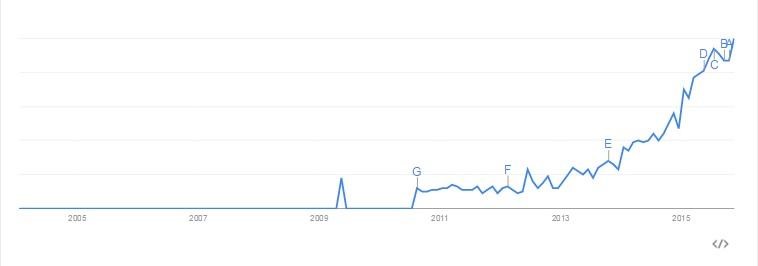
A Google Trends search of the phrase “Customer Success” shows how the phrase quickly rose to popularity in the past 2 years. in 2014 alone, the number of Customer Success job listings on Linkedin has increased by 300% according to Gainsight research. So what’s going on exactly?

What we are witnessing is the SaaS industry’s impact on the sales and delivery models of products.  Welcome to the “Subscription Economy”.

Traditionally, businesses derived most of their revenue from one-time purchases or long-term contracts. But now, with cloud advancements, the rise of Software As A Service, and a bustling B2B economy, the sales model has shifted to renewal sales in the form of pay-as-you-go and subscription plans.

Delivery-wise, businesses can now quickly deploy a Minimum Viable Product and acquire customers as they test and improve the product. The data gathered from customers’ interactions with the product (surveys, support tickets, etc.) is key to how every business evolves.

Customer Success is the SaaS answer to some of the challenges that the subscription model presents. Can non-SaaS businesses benefit from Customer Success strategies as well? Before we answer the question, we need to define Customer Success.

Related: Customer Success Strategies for Non-SaaS Businesses

When most people think of the average Customer Support experience, something like this comes to mind:

service (2)

Well, a bad experience at least.  Whereas we tend to think of account managers as usually distant people whose only care is to close deals or satisfy high-profile clients


As opposed to Customer Support and Account Management, Customer Success is a proactive approach to customer relationship management. Instead of waiting to respond to customer problems—in the case of customer support, or waiting to solve client’s conflicts—as account managers do, customer success is about anticipating the customer’s current and future needs.

Lincoln Murphy, SaaS expert, of sixteenventures.com defines Customer Success as:

Customer Success is when your customers achieve their Desired Outcome through their interactions with your company.”

By making sure that customers reach whatever outcome they desire from your products or services, you:

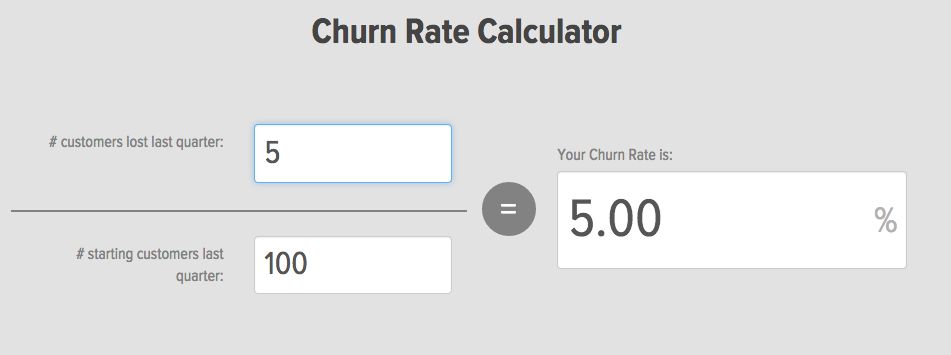
  • Lower Churn.

Churn-Rate-Calculator-Kompyte

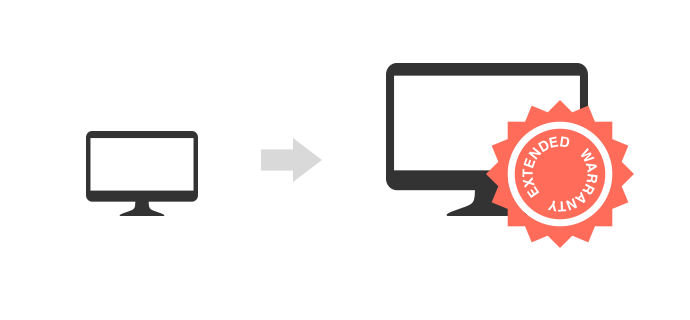
  • Increase Upsells.

upsell

  • Increase Customer Retention.
  • Increase Customer advocacy.

Since most of the revenue in the SaaS model flows in after the sale, a customer success department has to ensure the following:

  • Customers are successfully in implementing the product.
  • Customers understand how to use the product.
  • Customers receive excellent support.
  • Customers are engaged to share their feedback.
  • Customers are interested in the continued use of the product.
  • Customers are interested in acquiring new product features.

Do you have a CRM that keeps you organised?

The most user-friendly CRM on the market. 14-day free trial.

Start Free Trial

Painless setup, no credit card required

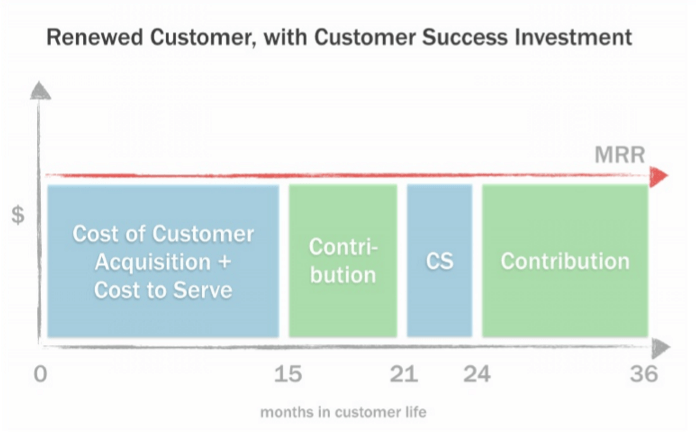
Depending on the product or service that your business offers, your customer success manager might have to focus on some responsibilities more than others.  In fact, the agility of your processes will prove invaluable in making the customer success role effective. Customer success teams can actually generate as much more or more revenue than sales teams over the life of a customer.

custommer success (1)

If the churn rates at the onboarding stage (Trial-to-Paid customers conversion for example) prove problematic, an agile customer success department should adjust its focus accordingly instead of sticking to one-size-fits-all approaches.

Is it relevant for non-SaaS businesses?

Your service/product does not need to be on the cloud for you to incorporate Customer Success into your business. Non-SaaS B2B companies, gyms, art workshops, and other businesses can benefit from customer success processes as well.

In the subscription model, the need to keep customers successful and happy throughout every single interaction with the company is urgent. In addition, there is a high focus on using customer data to implement key metrics in order to improve the product and customer experience. How does this translate for non-SaaS?

Customer Success, after all, remains about knowing your customers (segmentation article) and earning their trust.

Would you like to know your Customers better? Start your Teamgate Free Trial today!